YOGA & MEDITATION
Pranayama
Therapy
Breathing practices taught for a purpose: calming the nervous system, easing anxiety and sleep, supporting the lungs, or building energy. Simple, precise and yours to keep.
01WHAT IT IS
प्राणायाम · Regulation of the breath, the life force
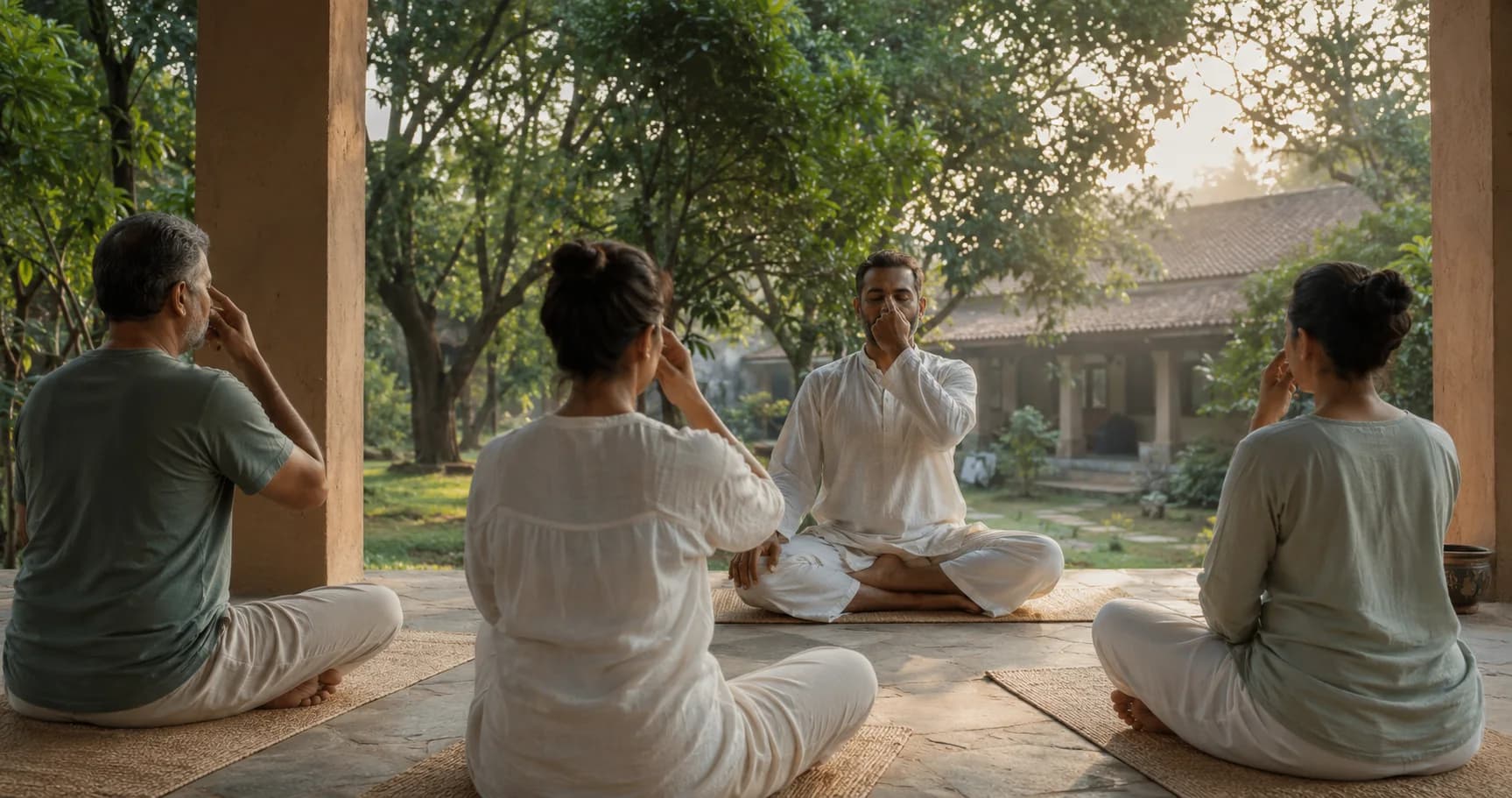
Pranayama is the yogic science of breath, and it is the practice with the most immediate effect on the nervous system. Slow, extended exhalation calms; alternate-nostril breathing balances; specific techniques clear the airways or build warmth and energy. In pranayama therapy the teacher selects and teaches the techniques that suit your condition and constitution.
It is central to our programs for stress, anxiety, sleep, respiratory tendencies and blood pressure, and it is the practice guests most often continue for years afterwards.
02HOW IT IS DONE AT AROGYA
- 01
Assessment of your natural breathing pattern.
- 02
One or two techniques are taught in stages, seated comfortably.
- 03
Practice is guided with attention to rhythm and ease.
- 04
A daily home routine of a few minutes is set.
03BENEFITS
- Calms anxiety and steadies the mind
- Supports sleep
- Strengthens the lungs and clears the airways
- Traditionally used alongside care for blood pressure
Often suited to
- Stress, anxiety and sleep difficulty
- Respiratory tendencies
- Guests who want a portable daily practice
- Preparation for meditation
Please tell us first
- Please mention heart conditions, blood pressure, epilepsy and pregnancy; some techniques are avoided
- Practise on an empty stomach
- Never strain the breath
04WHAT TO EXPECT
Quiet and surprisingly powerful. Most guests feel a shift in the first session and settle into a daily practice of ten minutes.
This page is educational and describes the therapy as traditionally practised. It is not medical advice and does not replace consultation with a qualified practitioner. Suitability, preparation and duration are confirmed individually at Arogya Retreatt. Content reviewed September 2026.
05QUESTIONS
Common questions about Pranayama Therapy.
How long until it helps?
Slow breathing calms within minutes. Lasting change in sleep or anxiety comes from a short daily practice kept up for a few weeks.